
When Everything Feels Urgent: Executive Function in an Overloaded World
Why Everything Feels Urgent
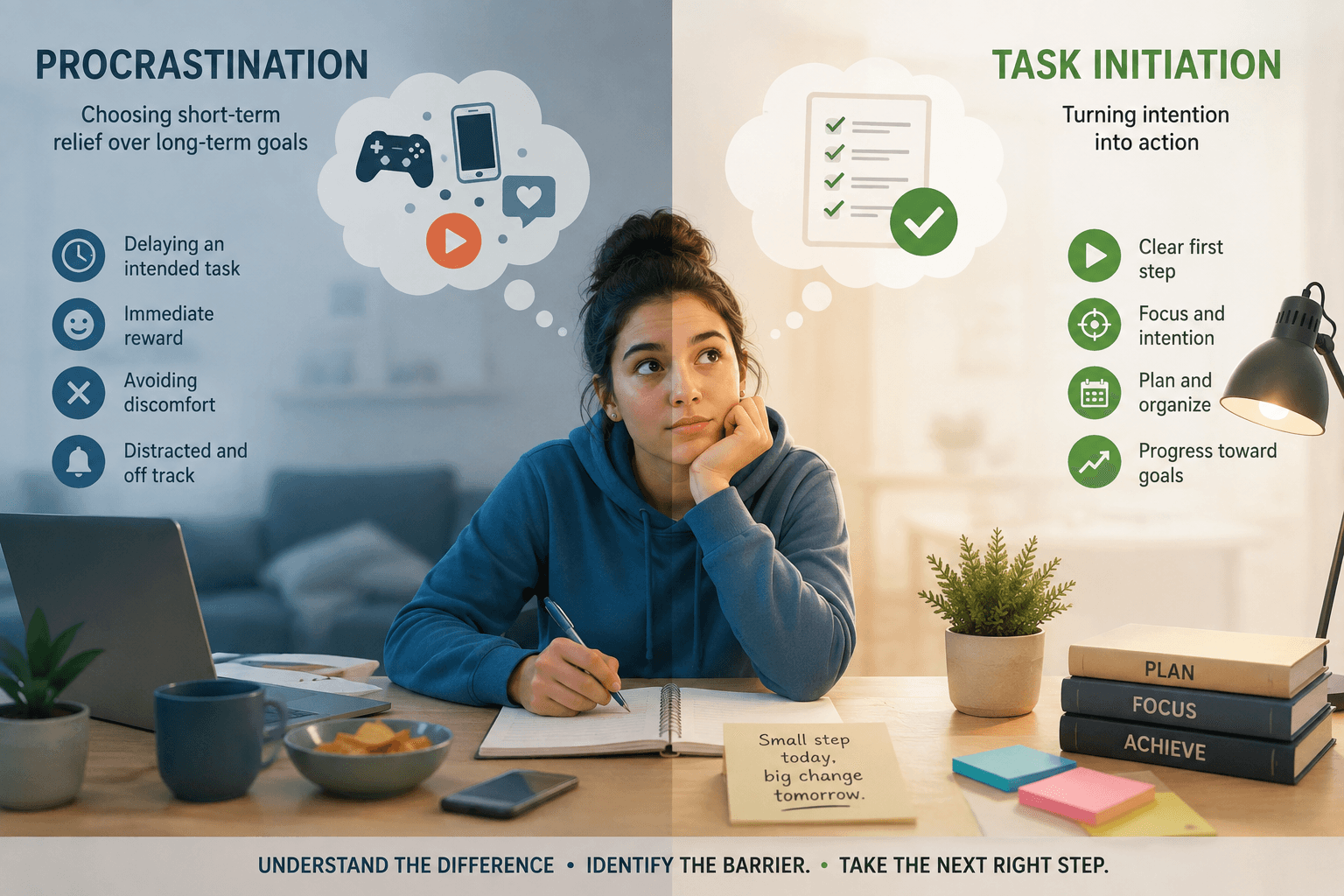
Building on Procrastination vs. Task Initiation last month, decision making and determining the difference between what is important or a priority to complete is often a struggle. Not everything that demands your attention deserves your immediate attention. Learning to separate what feels urgent from **what is actually important **is a valuable EF skill.
Consider these examples:
- An email marked “urgent” may not require an immediate response.
- A long-term project may be extremely important even though today's portion feels small.
- A bill due tomorrow may deserve priority over an interesting task that has no deadline.
- A difficult conversation may feel urgent because it creates emotional discomfort, even though waiting until you are prepared may be more productive.
When everything competes for attention, ask: What truly needs to happen today?
Then ask: What would happen if I did not do it today?
Create a pause between the feeling of urgency and the decision to act is important when learning executive function skills.
The Tendency to Respond to Importance Rather Than Priority
For some individuals, attention can be strongly influenced by interest, emotional intensity, or perceived reward. This does not mean a person does not care about an important task. It may mean that the brain has difficulty consistently directing attention according to priority when multiple “demands” compete for attention. That distinction matters.
Instead of asking, “Why can't I just focus on what matters?” a more useful question may be:
“What is currently capturing my attention, and does it deserves my attention?”
** **
Try the 3-option approach
When your list contains 20 things, choosing one thing can feel impossible. Instead, identify your** 3-options**.
Choose:
- One must-do: The task with the most immediate consequence if it is not completed.
- One important task: Something that meaningfully advances a larger goal.
- One maintenance task: Something that keeps your life, work, or environment functioning.
Your 3 options might look like:
- Submit the report due today.
- Spend 30 minutes on the project due next week.
- Pay the utility bill.
Everything else does not disappear. It simply moves out of the immediate decision-making space. Once these three options are complete, develop a new set of 3-options until the list is completed. This distinction is important because executive functioning is not only about getting things done, but also about deciding what deserves your attention now.
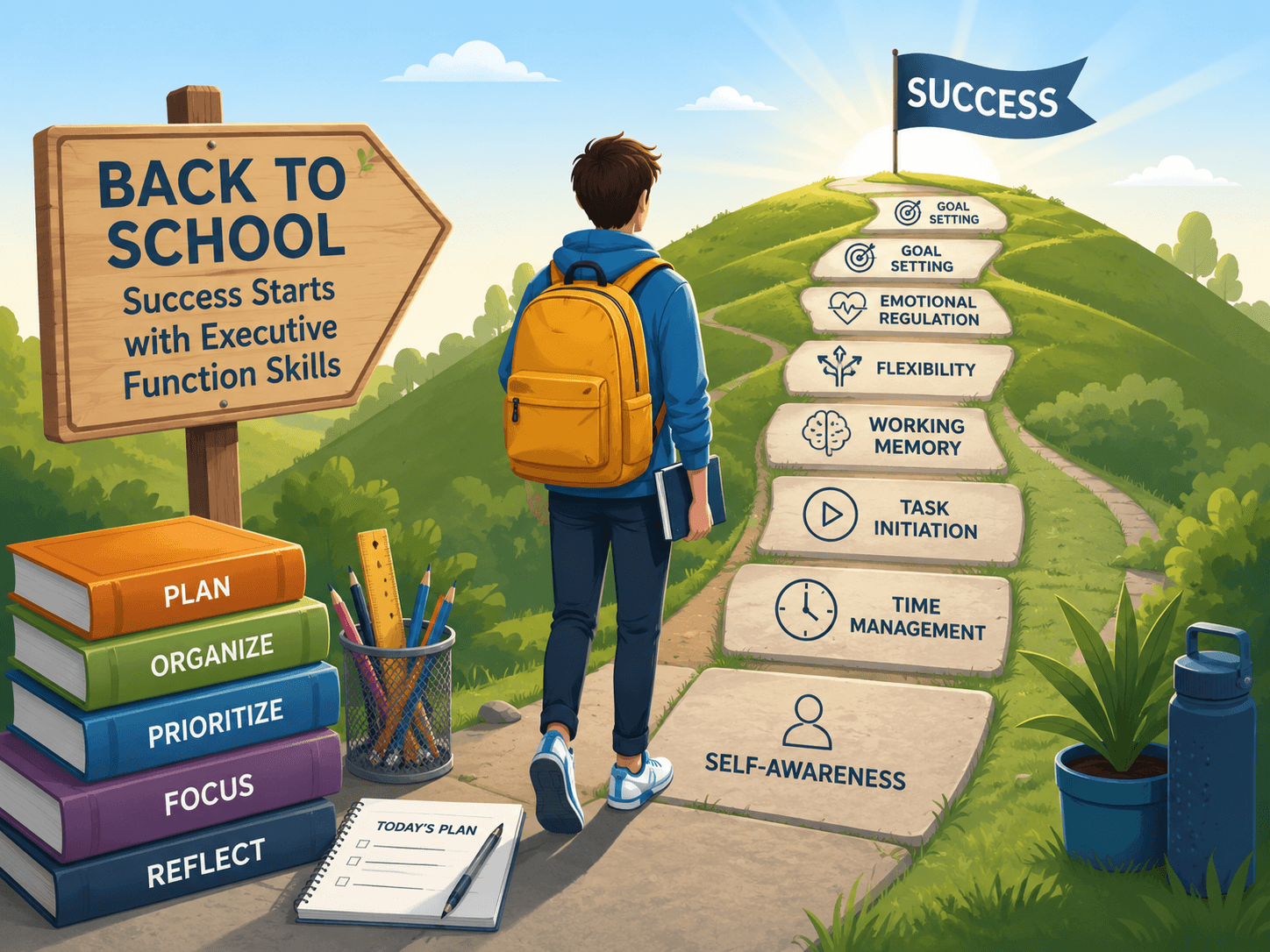
When we limit the list of 20 items to 3 options, we train our brain to see the importance of breaking the list into something less overwhelming and more achievable. Look for ways to break up the sense of being overwhelmed next month as we head into the Holiday Season. For additional support on developing Executive Function skills, “Get Started” with one of the Qualified Therapist on Pillars of Wellness main website.
Useful Related Resources:
Barkley, R. A. (2012**).** Executive functions: What they are, how they work, and why they evolved. Guilford Press.
Faraone, S. V., Banaschewski, T., Coghill, D., Zheng, Y., Biederman, J., Bellgrove, M. A., Newcorn, J. H., Gignac, M., Al Saud, N. M., Manor, I., Rohde, L. A., Yang, L., Cortese, S., Almagor, D., AlSaid, L. A., Al-Hamzawi, A., Al-Halabi, S., Al-Hohri, M., Al-Ghamdi, H., ... Wang, Y. (2021). The World Federation of ADHD International Consensus Statement: 208 evidence-based conclusions about the disorder. Neuroscience & Biobehavioral Reviews, 128, 789–818. https://doi.org/10.1016/j.neubiorev.2021.01.022