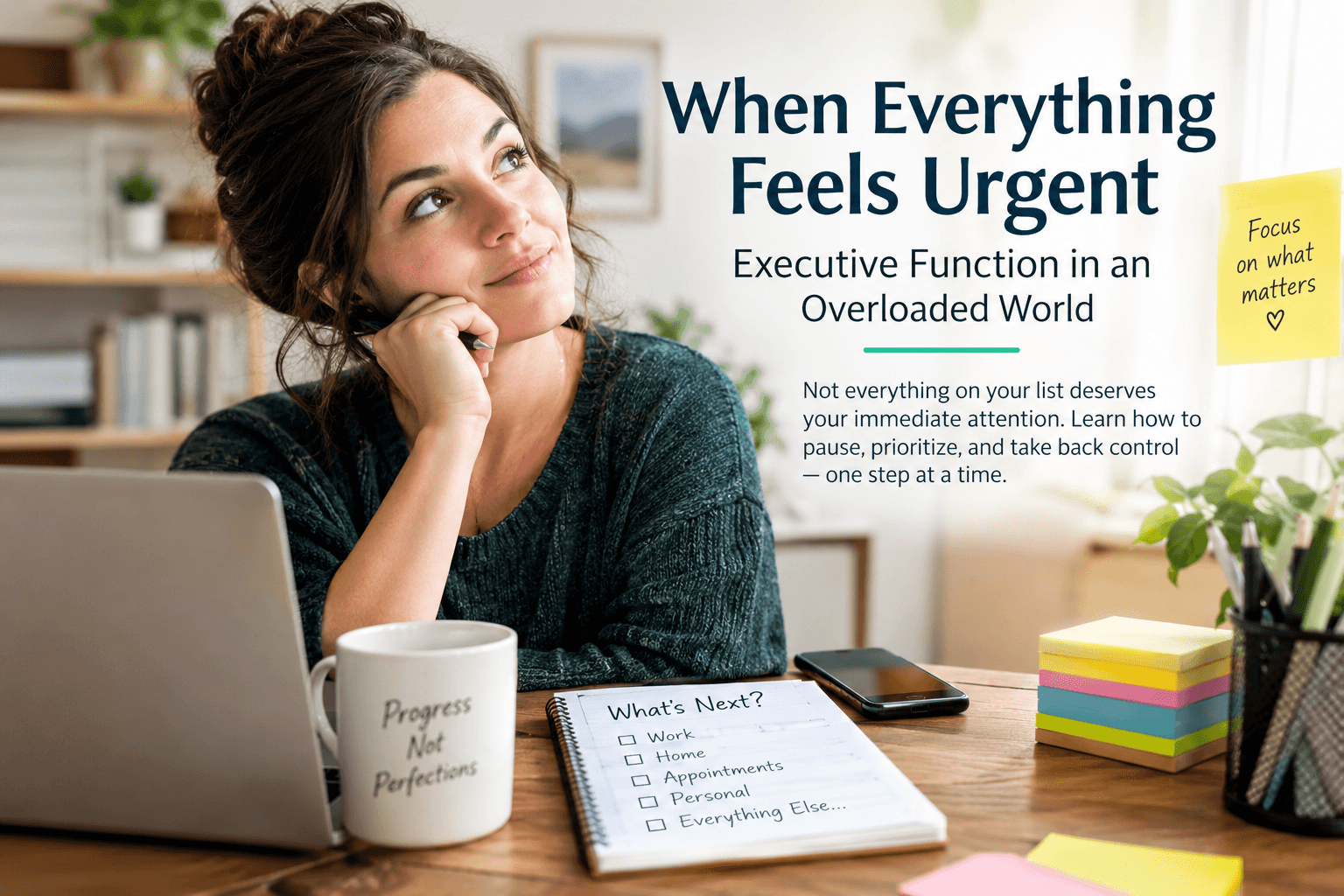

Last month we discussed he difference between urgent and important tasks to complete. Related to this idea is decision making and related emotions. Have you ever spent so much time deciding what to do that you run out of time to actually do it?
You stare at your to-do list, homework assignment, debate where to start that paper, research a decision long after you have enough information, or postpone something important because you are afraid of making the wrong choice. By the end of the day, you're mentally exhausted—but still feel behind.
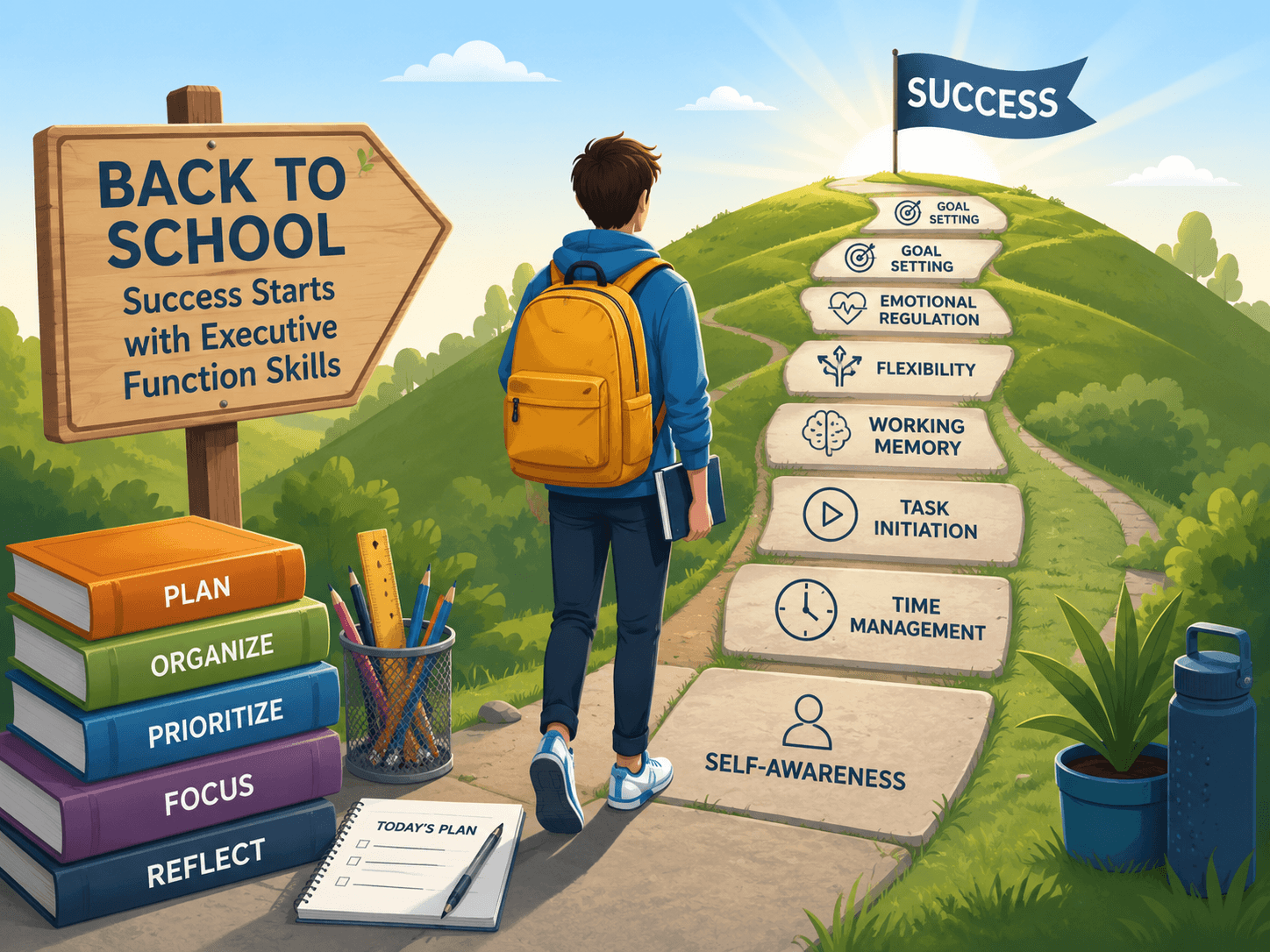
If this sounds familiar, your challenge may not be a lack of motivation. Decision-making draws on several executive functioning skills, including working memory, prioritization, emotional regulation, and task initiation. When these skills are difficult to manage, even everyday choices can feel overwhelming.
**The good news? You don't have to make perfect decisions. **Having a process that helps you move forward can help reduce five potential "blocks" interfering with your progress.
1. Too Many Choices? Narrow the Field.
The more options you consider, the more information you must evaluate. Trying to find the best choice can leave you unable to make a good enough one. Waiting until we have the "best" choice may blind us from seeing a better choice for us.
Try this: Limit yourself to two or three realistic options. Identify your top two priorities and stop researching when you have enough information to make a reasonable choice.
Quick check-in: Are you gathering information that will help you decide—or gathering more information because deciding feels uncomfortable?
2. Too Much to Remember? Get It Out of Your Head.
Comparing options requires you to remember details, weigh pros and cons, and keep your priorities in mind. That's a lot of mental juggling!
Try this: Write it down. Create a simple list of options, benefits, drawbacks, and next steps. For bigger decisions, break the problem into smaller questions. You may consider creating a visual diagram to see if any of the information is related in a meaningful way.
Quick check-in: What information are you repeatedly thinking about that you could write down instead?
3. Afraid of Getting It Wrong? Make Room for Uncertainty.
Sometimes the hardest part of a decision isn't choosing—it's worrying about regret, disappointing others, or making a mistake. Avoiding the decision may bring temporary relief, but the uncertainty often remains.
Try this: Ask yourself, "Am I missing important information, or am I afraid of what might happen?" Remember, a thoughtful decision can still have an unexpected outcome. You can make a reasonable choice without feeling 100% confident.
Quick check-in: What would you choose if you didn't need a guarantee that everything would turn out perfectly?
4. Overwhelmed by Everything? Focus on One Next Step.
When every task feels urgent (thinking to last blog), deciding where to begin can become a task in itself. Delayed action leads to mounting pressure, which can trigger frustration and self-criticism. When we become aware these emotions are arising, it is time to step back. By being aware or mindful of our emotions, we have the opportunity to address emotional regulation, but that is another discussion.
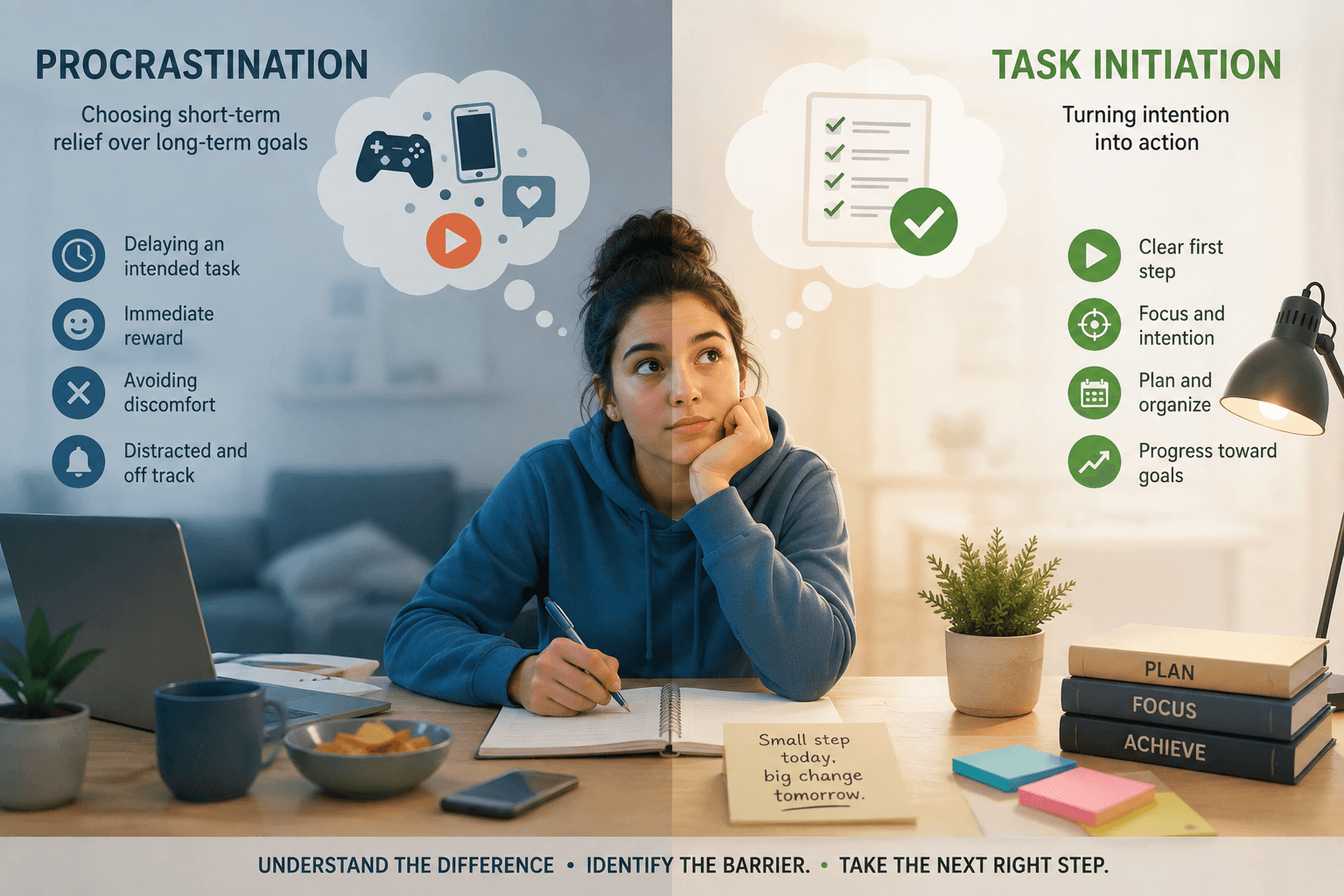
Try this: Choose one priority and identify the smallest physical action you can take. Instead of "finish the report," try "open the document and write three bullet points." Use a timer, reminder, or supportive accountability partner to help you get started.
Quick check-in: What's one action you could complete in the next five minutes?
5. Keep Getting Stuck? Build a Repeatable System.
Executive functioning challenges look different for everyone. You might overthink, avoid decisions, act impulsively, or struggle to follow through. Recognizing your pattern helps you identify which strategy may work best.
Try this five-step process:
- Define: What decision do I need to make?
- Narrow: What are my two or three realistic options?
- Prioritize: What matters most?
- Choose: What is a reasonable decision based on what I know?
- Act: What is my next small step?
Save this process and use it whenever you feel stuck. Repetition can make decision-making more manageable over time. Just like sports, playing an instrument, creating that piece of art, or anything, practicing executive function skills takes repetition to get good at the skills.
** **
Your Turn: Move from Overthinking to Action
Think of one decision or task you've been putting off.
- What's making it difficult? Too many choices, too much information, fear of making a mistake, or uncertainty about where to start?
- What could make it easier? Narrowing your options, writing things down, asking for support, or breaking the task into smaller steps?
- What's your next action? Identify one small step you can take today.
Remember: You don't have to solve everything at once. You don't have to feel completely ready. You just have to identify the next manageable step.
* *
If executive functioning challenges consistently interfere with your daily life, at Pillars of Wellness, we believe progress begins with understanding what gets in the way—and finding practical ways to move forward, one step at a time.