Back-to-School Success Starts with Executive Function: Five Daily Habits That Help Students Thrive
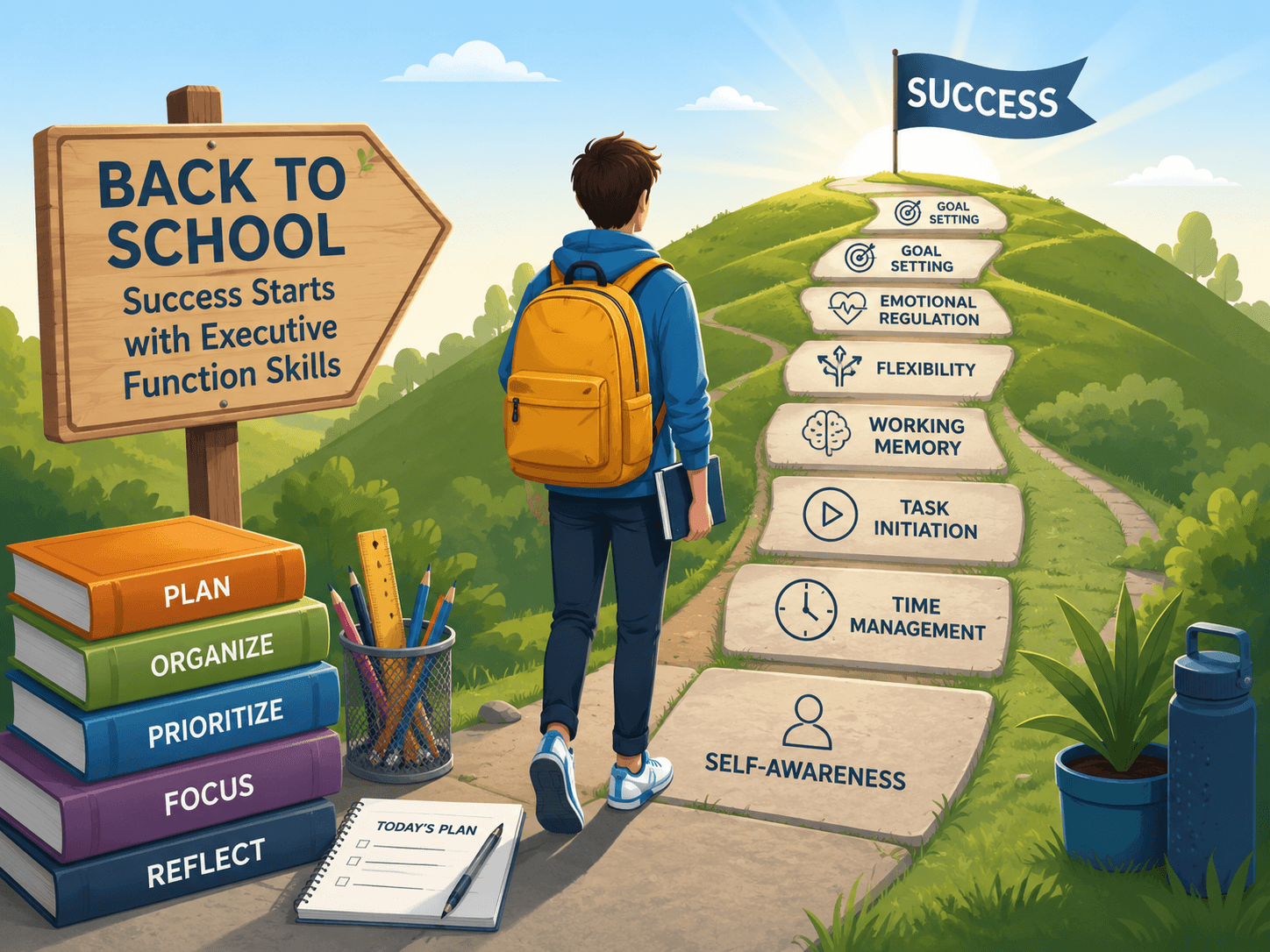
As summer ends and students prepare to return to school or college, most attention is given to new schedules, supplies, and course materials. Natasha Bedingfield discussed in “Unwritten” about setting new goals, building good habits, and learning from the past. As we start this new academic year, it is equally important—but often overlooked— the importance of preparing the brain for the increased demands of learning. Success in the classroom depends not only on knowledge and motivation but also on executive function: the mental skills that help us plan, organize, manage time, regulate emotions, remember information, and complete tasks.
The transition from the relaxed pace of summer to the structure of the academic year places significant demands on these skills. For students with ADHD or other executive function challenges, this adjustment can be especially difficult. The good news is that executive function skills can be strengthened through consistent daily habits. Practicing these skills is much like learning a sport or playing an instrument. Time and practice are essential.
Here are five simple practices that can help students start the school year with confidence.
1. Start Each Day with a Plan
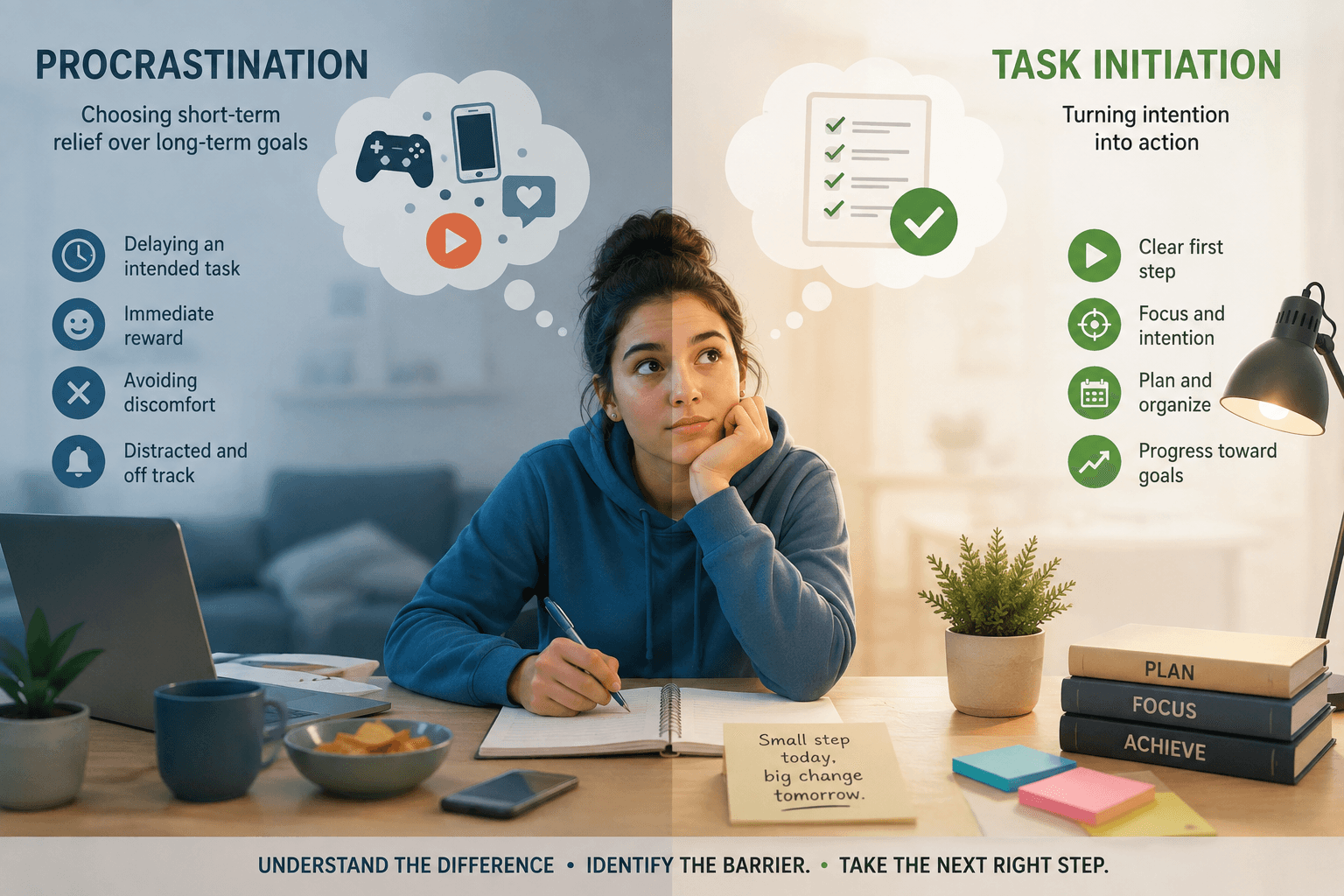
Instead of scrolling on social media each morning, eating a healthy breakfast and identifying your priorities to improve focus and reduce stress. Rather than trying to remember everything, write down the three most important tasks for the day, along with any deadlines or appointments. This simple routine reduces mental clutter and helps you approach the day with purpose.
Quick Tip: Before checking your phone or email, create a "Top Three" priority list to guide your day.
2. Make Your Schedule Visible
Executive function improves when important information is externalized rather than kept in memory. Whether you prefer a paper planner, wall calendar, whiteboard, or digital app, keeping assignments, activities, and deadlines visible helps reduce missed tasks and last-minute stress.
Consistency matters more than the tool itself. Choose one planning system and commit to using it every day.
Quick Tip: Review your schedule each morning and again before bed to stay ahead of upcoming responsibilities.
3. Use External Memory Systems
Working memory—the ability to hold and manipulate information in your mind—is limited, particularly during times of stress. Instead of relying on memory alone, create systems that support your brain. Calendar reminders, checklists, task management apps, voice memos, and sticky notes all serve as external memory aids that reduce cognitive load and improve follow-through.
Quick Tip: Whenever you think, "I'll remember that later," immediately write it down in a spiral pocket notebook you carry or set a reminder in a favorite app on your cellphone.
4. Prioritize Sleep and Physical Activity
Healthy executive function begins with a healthy brain. Research consistently shows that adequate sleep and regular physical activity improve attention, working memory, emotional regulation, and decision-making. Yet these are often the first habits students sacrifice when life becomes busy.
Aim for a consistent sleep schedule, limit screen time before bed, and incorporate regular movement into your day—even a short walk between classes can improve focus and reduce stress.
Quick Tip: Prepare your backpack, clothing, or materials the night before to create calmer mornings and protect your sleep routine.
5. End the Day with Reflection
Strong executive function includes the ability to evaluate what worked, recognize challenges, and make adjustments. Spending five minutes each evening reflecting on the day helps build self-awareness and prepares you for tomorrow.
Ask yourself: What went well today? What challenged me? What is my first priority tomorrow?
Reflection is not about perfection—it is about learning from experience and building better habits over time.
Quick Tip: Write tomorrow's first task before going to bed so you can begin the next day with clarity.
Small Habits, Big Results
Executive function skills are not developed overnight. They grow through consistent practice and intentional routines. As students transition back to school or college, focusing on a few daily habits can improve organization, reduce stress, and increase academic confidence.
This school year, don't just prepare your backpack or laptop—prepare your brain. By planning your day, using visible schedules, relying on external memory systems, prioritizing sleep and movement, and reflecting on your progress, you'll strengthen the executive function skills that support success both inside and outside the classroom. Pillars of Wellness therapists are available to help in-person or through telehealth appointments as that support through this transition.