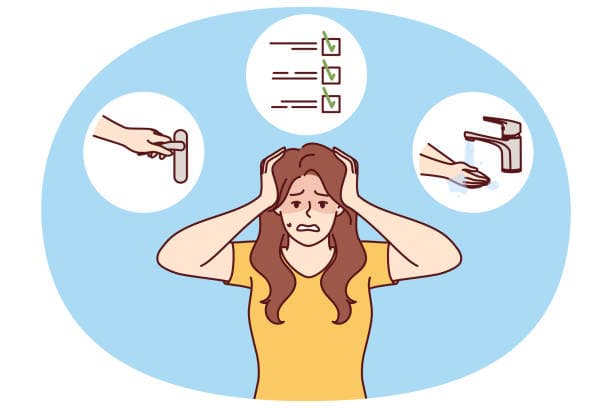
Every October, OCD Awareness Week brings a wave of social media posts, infographics, and well-meaning content about what OCD is; and every year, most of it stops just short of the thing that actually matters. Awareness is not the same as understanding, and understanding is not the same as change.
What We Get Wrong About OCD
The most common narrative sounds something like this: OCD is not about being neat or organized, it involves intrusive thoughts and repetitive behaviors. It is a real mental health condition, and people who have it deserve compassion.
All of that is true, though none of it is enough.
What gets left out is why OCD is so hard to treat without the right approach. OCD is not just about intrusive thoughts. It is about what those thoughts mean to the person having them, a brain that has learned to treat uncertainty as danger, and a person who has spent years doing everything possible to feel safe again.
And here is the part almost no awareness post mentions: the things people do to feel safe are exactly what keep them stuck. Avoidance, reassurance-seeking, mental rituals, compulsions. Every single one provides temporary relief and long-term reinforcement of the fear. The cycle does not break through understanding alone, it requires action.
What ERP Actually Is and Why It Works
Exposure and Response Prevention (ERP) is the gold-standard, evidence-based treatment for OCD and one of the most misunderstood approaches in mental health. When people hear "exposure therapy," they picture being thrown into their worst fears. That is not what ERP is. ERP is a structured, gradual, clinician-guided process of facing feared thoughts and situations without performing compulsions or escaping. It is paced, collaborative, and hard in the way that meaningful things are hard.
The brain does not unlearn fear by being told something is safe. That process, called inhibitory learning, happens through direct experience. You cannot think your way out of OCD—you have to live your way out of it. Every exposure is a vote for a different life. Every time you stay in the discomfort instead of escaping it, your brain recalibrates. The fear gets smaller, and you get stronger.
Living by Your Values When Anxiety Is Loud
Recovery is not about eliminating anxiety but rather choosing your values over your fear. OCD almost always attacks what matters most to you. If you care deeply about being a good person, OCD will give you intrusive thoughts about morality. If you love your family, OCD will target your relationship with them. If your faith is central to your identity, OCD will capitalize on it.
This is not a coincidence. OCD latches onto what you care about most because that is where the stakes feel the largest. The goal of OCD treatment is not to have a mind free of intrusive thoughts, but to build a life so grounded in your values that anxiety no longer gets to make your decisions. Treatment teaches you to follow your values even when anxiety is loud, even when uncertainty is present, even when everything in you wants to take the safe way out. It is choosing what matters over what feels comfortable.
What This Week Is Actually For
OCD Awareness Week is about closing the gap between the millions of people living with OCD and the treatment that actually works. Most people with OCD spend years in therapy that was not designed for them. They gain insight without gaining ground, they understand their fears without facing them, and they keep surviving instead of living.
Effective treatment exists. It is not easy, and it does require courage, but it works. OCD & Anxiety Exposure Services at Pillars of Wellness provides specialized, evidence-based care for OCD and anxiety-related disorders across Northwest Indiana and Chicagoland. No formal diagnosis required.
info@pillarsinspires.com | 219-323-3311 | pillarsinspires.com