On October 1, the Vatican published Pope Leo XIV’s monthly “Pray with the Pope” video message. This month’s intention is mental health ministry. It isn’t a policy paper or a statistical report. It’s a prayer, and a surprisingly honest one.
Naming the hidden wounds
The prayer opens by speaking to a God who knows the light and the shadows inside every person, including the silent wounds nobody else sees. The Pope then brings before God those who struggle alone with anxiety, depression, or any other mental illness. He affirms that God calls each of them by name with tenderness, and that in God they find dignity and hope.
That affirmation matters because stigma often tells people the opposite: that their struggle is a weakness, a failure of faith, or something to hide. The prayer starts from a different premise, that a person’s worth does not depend on their mental state.
A rare moment of repentance
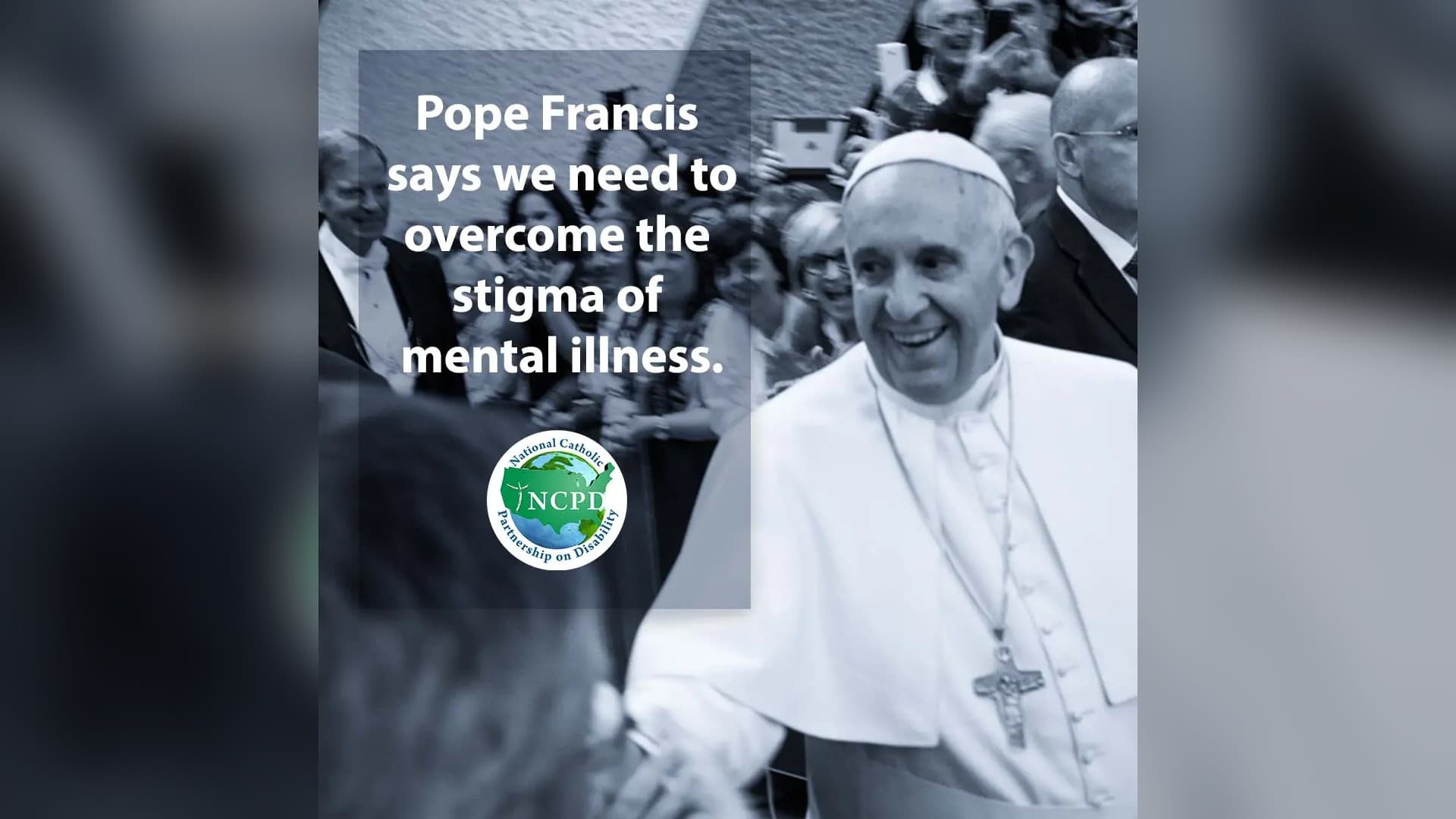
The most striking part comes next. The Pope asks forgiveness for the times we have looked away and fed the stigma and discrimination that people with mental illness face.
The Church rarely says this so directly. The prayer treats stigma as something Catholics have taken part in, through silence, awkwardness, or well-meant advice that made things worse, and not only as a problem “out there” in society. The Pope’s remarks in Barcelona in June were in the same spirit. There he warned believers against spiritualizing pain by calling it “God’s will,” because that can minimize suffering and hurt people. (Breitbart)
The Church as an open house
The prayer’s central image is of the Church as an open house, a safe space with a place for everyone. It describes a community that accompanies and never excludes, listens without judging, and draws near without fear.
The wording is concrete. Listening without judgment and drawing near without fear are things a parish can actually practice: how a greeter responds to someone in tears, whether a small group feels safe for honesty, what the community does when a member disappears for months.
Remembering the caregivers
The Pope also prays for those who care for others: professionals, family members, and volunteers. He asks God to give them strength and compassion, and he describes their work as building bridges of understanding and comfort. Caregivers burn out, and parishes often overlook them. A spouse supporting a partner through severe depression or a parent of a struggling teenager may need ministry too.
Prayer as a way of being present
The prayer begins by addressing a God who knows our innermost depths, the light and the shadows alike. That is a kind of attention many people find hard: looking at what is actually going on inside us without hiding it, fixing it, or judging it. It resembles what mindfulness teachers describe as noticing without condemnation, and the Catholic tradition has practiced it for centuries.
Several traditional forms of prayer work as ways of training attention:
- Breath prayer. Breathe in slowly while silently praying “Lord Jesus Christ, Son of God,” and breathe out with “have mercy on me.” This is the Jesus Prayer from the Christian East. Pairing words with the breath gives a restless mind something steady to rest on.
- The Examen. St. Ignatius of Loyola taught a short review of the day: notice what happened, name the feelings that came with it, give thanks, and ask for help tomorrow. It is meant to observe without self-punishment.
- Lectio Divina. Read a short Scripture passage slowly, then stay with the single word or phrase that stands out instead of rushing to analyze it.
- The Rosary. The rhythm of the beads and the repeated words engage the hands and the body, which can help when thoughts are racing.
- Silent presence. Sitting quietly before the Blessed Sacrament, or in a quiet room at home, with no agenda except to be there.
There is one important difference from secular mindfulness. Christian prayer isn’t about emptying the mind or achieving calm for its own sake. It is attention directed toward Someone, and the hope is to be met, not merely to relax. For many believers, that sense of being known without being judged is the very thing that may ease the loneliness of mental illness.
A three-minute practice to try:
- Sit comfortably and take three slow breaths.
- Silently name what you are feeling right now, without arguing with it.
- Offer that feeling to God in a sentence, such as “Lord, this is where I am.”
- Rest in silence for a minute or two, returning to your breath or a short phrase when your mind wanders.
A caution matters here. Prayer practices can support mental health, but they don’t replace therapy, medication, or medical care, and they are not a test of faith. If sitting in silence stirs up overwhelming anxiety, intrusive thoughts, or painful memories, that is not a failure. It may be a sign to reach out to a counselor or doctor, and to stop the practice for now if it is making symptoms worse. The Pope’s prayer itself asks the Church to work alongside those who care professionally, not to stand in for them.
From prayer to integration
The prayer ends by asking for the Holy Spirit’s help so that care for mental health becomes part of the life and ministry of our communities and of the whole Church. The word integrate is the heart of it. The Pope isn’t asking for a one-time awareness event. He wants mental health care woven into ordinary parish life, in the same way the Church already makes room for the sick, the poor, and the grieving.
Some dioceses are already doing this. The Diocese of Phoenix, for example, has made mental health a pastoral priority and has an office dedicated to mental health ministry. (archpitt)
What you can do this month
- Pray the intention at Mass, in your family, or in a prayer group.
- Try one contemplative practice for a week, such as breath prayer or the Examen, and notice what changes.
- Ask your pastor whether your parish has anyone trained to accompany people through mental health struggles, and offer to help start something.
- Check in with a caregiver you know, whether a friend, relative, or fellow parishioner.
- Examine your own habits. Think about whether you’ve dismissed someone’s struggle or reached too quickly for a Bible verse when they needed you to listen.
Closing thought
The prayer asks that the Church become a living sign of God’s mercy, whose purpose is to never abandon and always restores. That is a high standard, but it begins with small acts: an open door, an attentive ear, a few quiet minutes of honest prayer, and a refusal to look away.
If you or someone you love is struggling, please reach out to a trusted friend, a priest, or a mental health professional. In the U.S., you can call or text 988 at any time to reach the Suicide & Crisis Lifeline.