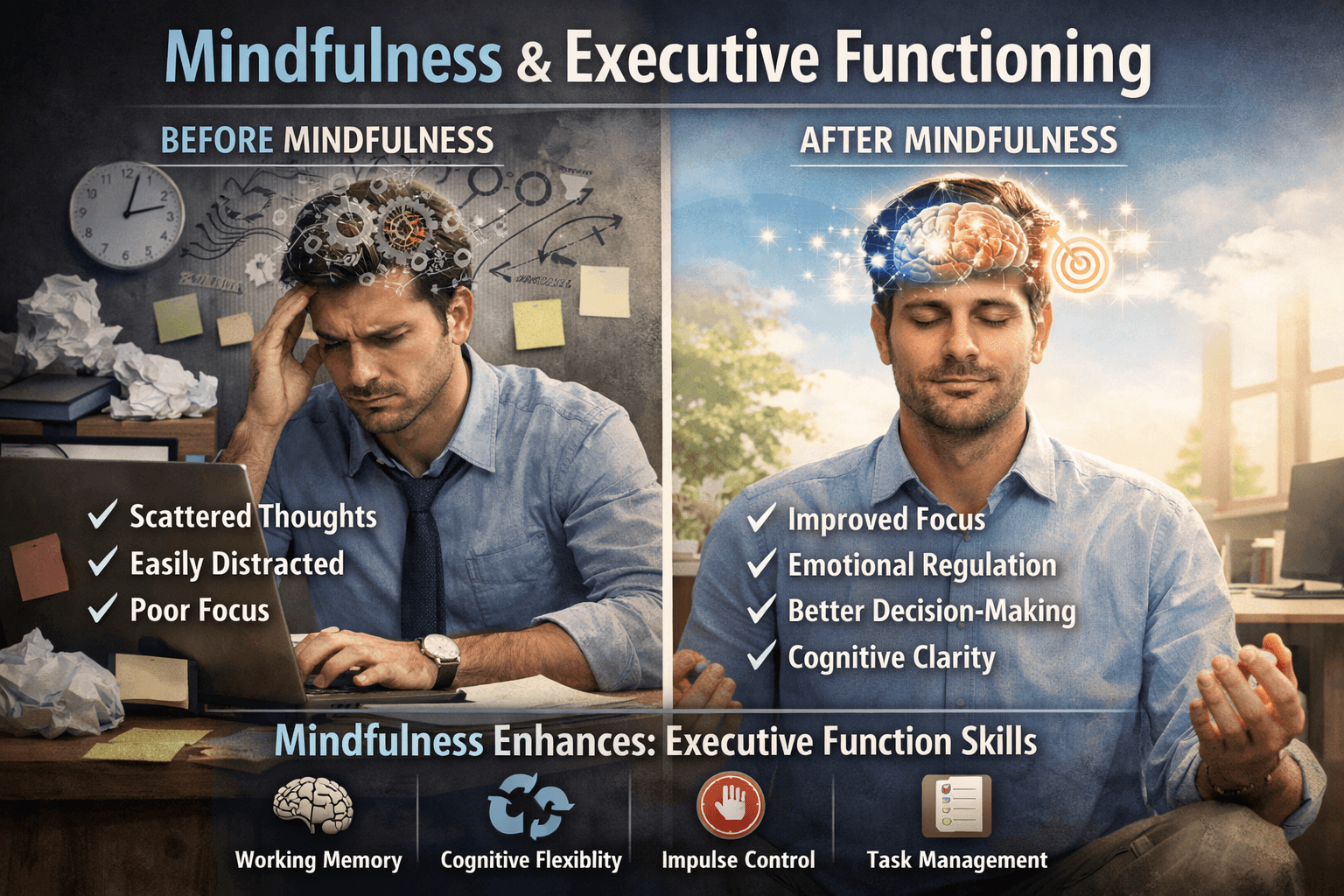

Let's start here—no labels, no pressure. Just you and a few honest questions:
- Do you finish things… or mostly start them?
- Does your brain feel "on" all the time—but not always on the right thing?
- Are you known as capable, but secretly feel like you're working twice as hard just to keep up?
If any of that hits a little too close, stay with me. Some adults experience difficulties that they or others perceive as laziness, internal restlessness, irresponsibility, or a lack of discipline—character flaws, rather than signs that something else may be going on. Many don't want a diagnosis, in part because of the stigma around mental health that, while slowly shifting, hasn't fully lifted. Adults may internalize feelings of shame or self-doubt that quietly build resistance to seeking the kind of support that can improve work performance, deepen relationships, and raise their overall sense of well-being.
"I Have a College Degree… I Can't Have ADHD"
This common—and understandable—thought comes up often, but success tends to conceal underlying executive functioning challenges rather than eliminate them. Many high-achieving adults develop compensatory strategies that sustain performance on the outside while quietly increasing cognitive and emotional strain. That can look like relying on last-minute pressure to get things done, working longer hours to offset inconsistent focus, or avoiding complex tasks and depending on memory instead of structured systems.
"If It Were That Bad, Wouldn't It Be Obvious?"
This assumption often overlooks how adult ADHD actually presents—subtly, internally, and frequently masked by outward competence. Rather than matching common stereotypes, it tends to emerge through patterns of inconsistency, overwhelm, and self-regulation challenges that others may never notice. Chronic procrastination, difficulty organizing thoughts, losing track of time, strong starts that are hard to sustain, and a persistent undercurrent of quiet self-doubt are far more typical than the picture most people have in mind.
"Other People Seem to Handle This. Why Is It So Hard for Me?"
That question often carries a lot of weight—but it can be reframed in a way that promotes clarity and self-compassion. Rather than asking "What's wrong with me?", consider whether the systems you've been using are actually aligned with how your brain works. The issue is less about effort and more about fit. Persistent struggles may reflect a mismatch, not a deficiency, and shifting away from self-judgment toward evaluating what's actually working is often where things begin to change.
The "I'll Just Push Through It" Cycle
Many high-performing adults recognize a recurring pattern: initial delay gives way to mounting pressure, followed by a burst of last-minute productivity, then completion—and then exhaustion, paired with a renewed promise to do better next time. While this cycle can be effective in the short term, it is rarely sustainable. Over time it tends to produce burnout, lingering frustration, and the quiet, persistent question: Why is this still so hard?
"I Don't Want to Make Excuses."
This is not about making excuses—it is about developing effective, individualized strategies. Understanding how your brain works allows for more intentional approaches. Working with a therapist trained in executive functioning focuses on building practical systems rather than assigning labels. That means creating structures that reduce overwhelm, breaking tasks into manageable steps, strengthening attention and emotional regulation, and replacing the cycle of "try harder" with more sustainable ways to try differently.
A Different Place to Start
If any part of this resonated, it may be worth a closer look—not at your effort, but at the systems you've been relying on. Sustainable change often begins with a simple shift in perspective: from self-judgment to self-understanding. You don't need to keep running the same cycle to prove you're capable. The goal is to find approaches that actually work for you. A therapist won't "fix" you—but the right support can help you understand your patterns, challenge what isn't working, and build systems that truly fit your life. That shift, from ongoing frustration to meaningful clarity, is often where real, lasting change begins.