Posted on: March 13th, 2026

Protect Queer Youth

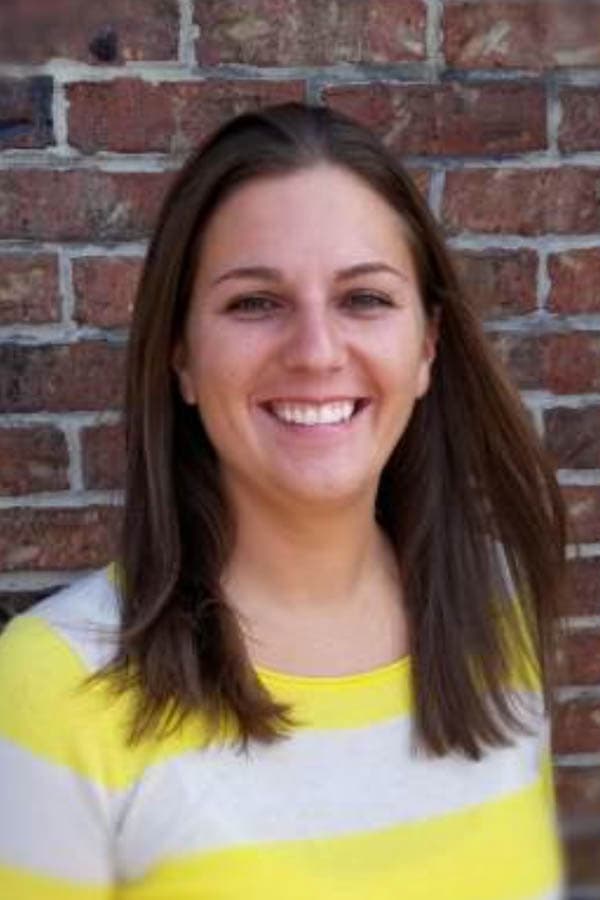
By: Kara VanHimbergen | PILLARS OF WELLNESS

As of a couple weeks ago (2/9/2026), I’ve been promoted to the role of Pillars’ [2S]LGBTQ+ Youth Specialist. I’m really excited to see what I can do in this position to advocate and provide care for queer youth in Indiana (and my other clients who are neither queer nor youths, of course)! So far, the hardest part of this new role is that it’s a big job; I have so much to say and no idea where to start. Every time I choose a starting point, I find that I have more explaining to do than I initially thought because there’s an immense lack of education regarding what it means to identify as 2SLGBTQ+ and how those identities develop over the lifespan. Wright (2026) endorses this claim stating, “The failure of sexuality education to affirm 2SLGBTQ+ people was frequently referenced by participants as harmful to their identity development” (Wright, 2026, p. 18).

What’s in a Word: Queer

Nevertheless, I suppose I can start with a note on language (a much bigger topic for another time). I’m electing to use the word “queer” as an inclusive label because, let’s be honest, 2SLGBTQ+ is a mouthful (and the order matters; another topic for another time). However, I do want to acknowledge that “queer” originated as a slur; members of the queer community who have been blessed enough to be allowed to grow old might flinch when they hear the word. Through no small feat of advocacy, the word “queer” was reclaimed by the community in the late 21st century (read: recently). Another equally valid critique of the word’s use is that “queer” is too vague (Farias, C., 2025). The community is far from being a monolith; there’s actually quite a lot of discourse (yet another topic for another time). So there’s a fine line between being too specific and not specific enough, and everybody has an opinion about it. Ultimately, just like in therapy, finding the line is up to the person you’re talking to and the context they bring into the conversation. If they feel empowered to “um, actually” your vague language, listen to the specifics that matter to them. If they look like they’re doing calculus in their head before sighing and saying, “let’s just say ‘queer,'” go with that.

What’s in a Word: Youth

One need only look as far as the community acronym to track the development of language over time. The community was once just for gay men, but then lesbians co-opted the word before coining the term “lesbian” (Berg, 2023). The acronym has developed from “GLB” to “2SLGBTQ+.” All this to say that previous generations of queer youth were lucky if they even knew the words “gay,” “lesbian,” or “bisexual.” Nowadays, the queer youth are much more informed thanks to the blessing and the curse that is the internet: a great place to discover labels that specify the vagueness of “queer,” or to explore that none of the available labels really suit your lived experience, or to get hopelessly lost down a rabbit hole of discourse, but it does mean that the information is out there. The internet’s ability to validate the lived experience of queer youth, to provide a space for exploration, and to find ways to connect to the broader community does have a direct, positive impact on the mental health of queer youth (Berger, et al., 2022). However, I would be remiss if I didn’t also point out that current policies are attempting to divide the internet into spaces reserved for those who can prove they are 18+ and those who are still minors. Couple that with the fact that LGBTQ+ spaces are often incorrectly assumed to be 18+ due to the idea that there is something inherently sexual regarding conversations about sexuality (Dykstra, K. J. & Litwiller, F., 2021), and the idea of the internet being a safe haven for queer youth becomes quite grim.

The lived experience of many queer people involves growing up with an idea that they were quietly fundamentally different from their peers, but that they didn’t have a chance to reckon with that until adulthood, or late adolescence. As time has passed and society has made strides towards acceptance, queer youth are more likely to grapple with the concept of having a marginalized identity at the same time that they’re figuring out how to have an identity at all. While more complicated, this change might mean that the no-less-awkward Second Queer Adolescence in your 20’s can finally be laid to rest (yes, trans kids, I’m talking to you too).

One barrier to this more straightforward identity development process is the idea that kids are “too young to know” that they are queer. In 2025, the Pew Research Center found that 50% or more of queer adults thought they might be queer before age 14 (Bollinger, 2025). When you raise children in a society that is majority cisgender (having a gender identity that does align with your sex assigned at birth; the opposite of “trans”), queer kids often confront feelings of being different from their peers as soon as they are old enough to grasp the concept of gender and romantic/sexual attraction respectively. Children are introduced to these concepts at quite a young age because, as said by Dykstra, K. J. & Litwiller, F. (2021), children are viewed as empty vessels that are then filled with society’s ideals, rendering them straight and cisgender until proven otherwise. The reason many queer youth did not come out in my day still remains true nowadays: that, as minors, they are simply denied the ability to exercise as much autonomy as legal adults, so they risk being cut off from their family of origin if they reveal these societally divergent feelings, which is a direct risk to their sense of safety and ability to access basic needs for survival (Berger, et al., 2022). Conversely, “Family, friend, and society acceptance are associated with better mental health, well-being, and self-esteem in LGBTQ individuals” (Berger, et al., 2022, p. 2).

What’s in a Word: Protect

Protecting queer youth means more than just being an isolated ally; it means standing up to political, systemic, and cultural forces that keep queer kids in a state of suffering (this is true for all marginalized identities as well). It means calling out casual homophobia and transphobia (McDermott, et al., 2021), and pushing back against anti-2SLGBTQ+ policies. After all, two years ago, “90% of queer youth reported that their wellbeing was negatively impacted by recent politics” (The Trevor Project, 2024, sec. 4). Protecting queer youth means creating accepting environments beyond just the kids’ homes (if they’re accepting to begin with) (Dykstra, K. J. & Litwiller, F., 2021). It’s about showcasing stories of queer joy instead of trauma and rejection; it’s about questioning the narrative that society presents as the only acceptable way forward (Wright, 2026). In short, protecting queer youth means removing barriers to acceptance and making progress towards equity, which is far from easy, but not impossible. That’s why my role with Pillars of Wellness matters; that’s why the whole Inclusive Care service line matters. If society at-large is not a safe place for queer people, then therapy is that place where our clients can feel accepted and empowered to embrace their identities, to grieve the ways they wish the world were different, and to make strides towards change where it’s needed.

References

Berg, A. (2023). Unpacking the acronym: The rich meaning of 2SLGBTQIA+. The Alberta Teacher’s Association. https://teachers.ab.ca/news/unpacking-acronym.

Berger, M., Taba, M., Marino, J., Lim, M., and Skinner, S. R. (2022). Social media use and health and well-being of lesbian, gay, bisexual, transgender, and queer youth: Systematic review. Journal of Medical Internet Research, Vol 24(9). https://dx.doi.org/10.2196/38449.

Bollinger, A. (2025). Most LGBTQ+ people knew their identities before age 14, but hide it for years. LGBTQ+ Nation. https://www.lgbtqnation.com/2025/05/most-lgbtq-people-knew-their-identities-before-age-14-but-hide-it-for-years/.

Dykstra, K. J. & Litwiller, F. (2021). “Are you trying to make them gay?”: Culture wars, anxieties about genderplay, and the subsequent impacts on youth. Leisure Sciences, Vol 43(3-4). https://dx.doi.org/10.1080/01490400.2020.1830902.

Farias, C. (2025). “Is ‘queer’ a slur? A look at its history and reclamation.” Chris Paul Rainbows. https://www.chrispaulrainbows.com/blog/is-queer-a-slur.

McDermott, E., Gabb, J., Eastham, R., and Hanbury, A. (2021). Family trouble: Heteronormativity, emotion work and queer youth mental health. Health: An Interdisciplinary Journal for the Social Study of Health, Illness and Medicine, Vol 25(2), Mar 2021. pp. 177-195. https://journals.sagepub.com/doi/epub/10.1177/1363459319860572.

The Trevor Project. (2024). 2024 National survey on the mental health of LGBTQ+ young people. The Trevor Project. https://www.thetrevorproject.org/survey-2024/#mental-health-suicide-risk.

Wright, JJ. (2026). Lateral gender-based violence in 2SLGBTQ+ communities: The stifling of queer joy through intersectional oppression, “pitiful” sexuality education, and media (mis)representation. Journal of Homosexuality, Vol. 73(4). https://doi.org/10.1080/00918369.2025.2489454.

If you or someone you know could benefit from support, Pillars of Wellness is here to help. We have dozens of trained clinicians ready to support you, so please visit pillarsinspires.com or call (219) 323-3311 for more information or to schedule an intake. Most insurances are accepted.

Pillarstherapy.com is no longer affiliated with Pillars of Wellness. Our official website is www.pillarsinspires.com .